
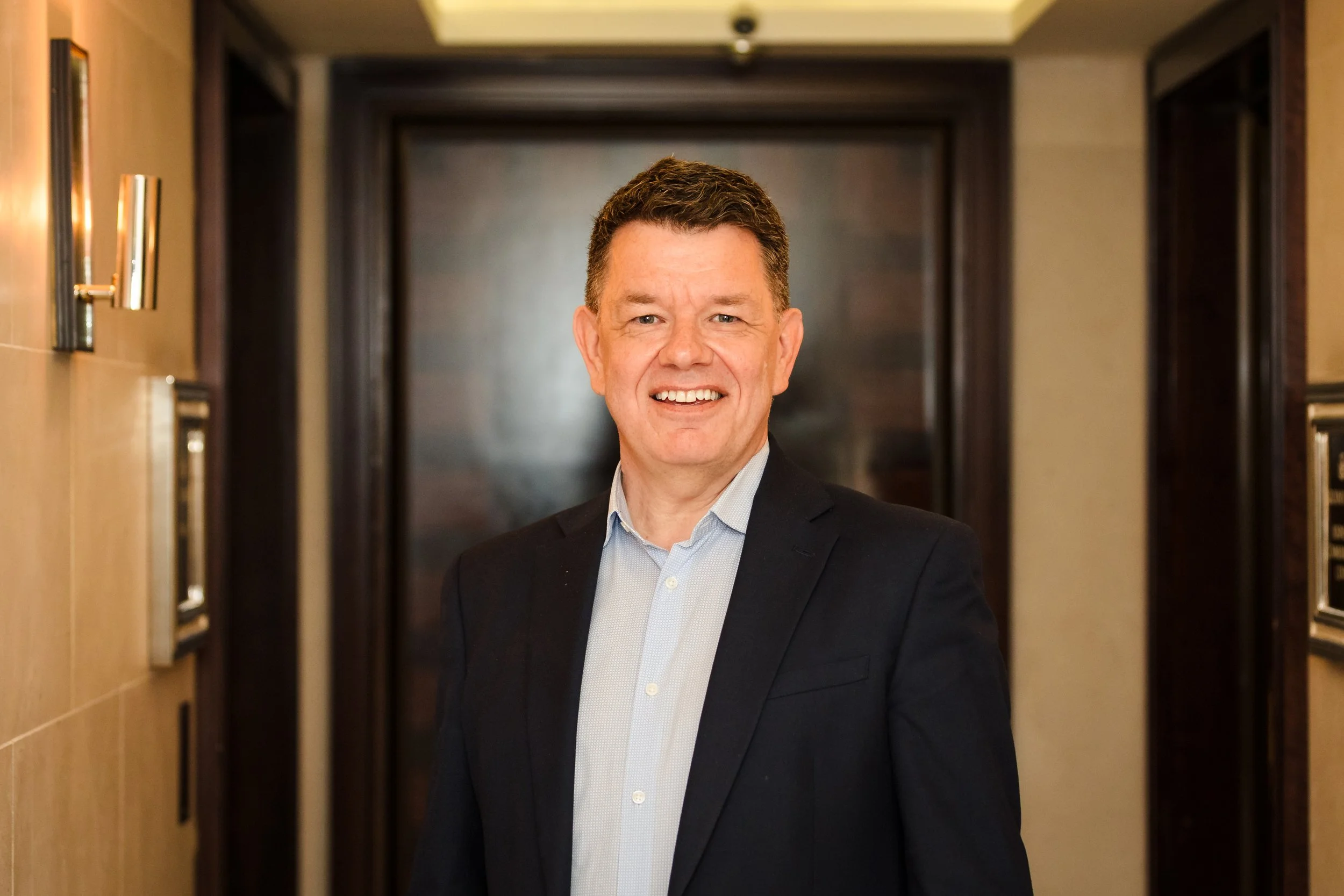
“Richard Armstrong, who leads the Smart City Digital Twin initiative at the City of London Corporation, where he is building the sovereign spatial computing infrastructure that connects geospatial data with city-scale operations, put the challenge plainly:
”The space industry has been selling ingredients; cities need the meals.”
The implication is clear: the future growth of the space economy may be shaped less by upstream capabilities and more by how effectively downstream applications respond to real-world urban needs.”
“He is the best Enterprise infrastructure architect I know, and has an incredibly broad level of knowledge... Richard works well with both the business and IT colleagues, and always goes above and beyond to get the job done.”
“Without doubt one of the best architects I have worked with. Calm under pressure, articulate, immensely competent, a valued addition to any organisation.”
Fellow of the British Computer Society FBCS
Richard Armstrong works where artificial intelligence meets the physical world. He is a Chief Enterprise Architect, spatial computing expert and digital strategist. He has spent 40 years working at the boundary between enterprise technology and the physical world.
Richard trained as an electrical and electronics engineer at Swinburne University of Technology in Melbourne, Australia, and started working in technology in 1986. His career has been consistent, even as the field has evolved. He started his technology career servicing IBM PCs, deploying local-area-PC networks (pre-Internet), deploying network infrastructure & storage systems in Data Centres to cloud engineering, solution architecture, operational technology and now leading AI driven enterprise architecture for global scale organisations and the Public Sector. He has developed unique expertise in spatial computing, LiDAR, eXtended Reality and now Digital Twins at city scale. Throughout, the core problem has remained the same: making physical objects understandable to the systems that need to make decisions about them.
He has led enterprise architecture practices for UK central government departments including the Ministry of Justice, the Department for Environment, Food and Rural Affairs, and HM Courts & Tribunals Service and the City of London Corporation & Police, on programmes from £250M and £1BN in scale. At DEFRA he designed and proved the integration of the GOV.UK Verify identity platform with the Rural Payments Agency payments platform, giving UK farmers secure access to £2Bn in remunerations, and briefed the Secretary of State for Environment on the approach.
As a Director and Lead Enterprise Architect at KPMG, he led digital strategies and IT and OT technology architecture for a €15BN cross-border high-speed rail programme, a private healthcare group operating across 40 hospitals, a national food retailer, and two UK universities. As Global Enterprise Architect at a FTSE-250-listed automotive retail and distribution group, he built the global group architecture practice from scratch across 35 international markets and deployed virtual and augmented reality retail experiences for premium automotive retail centres internationally.
He has worked at the boundary between enterprise technology and the physical world since 1986 — from electronics engineering, through data centres, cloud and operational technology, to AI, LiDAR, extended reality and digital twins. He is currently building the digital and AI roadmap for a sovereign digital twin of the City of London: one square mile that runs a police force, produces £110bn a year and holds 877 listed buildings, all under a single organisation with no unified digital picture of any of it.
He owns and uses Apple Vision Pro, Meta Quest 3, Bigscreen Beyond 2e and Microsoft HoloLens 2, and brings working headsets to engagements where a live demonstration adds value. He takes the view that no one should advise on this technology who does not use it daily.
He has keynoted on spatial computing, digital twins and immersive technology across the UK, Europe, the United States, the Middle East and Asia, to technical and boardroom audiences alike. He is a Fellow of the British Computer Society, TOGAF 9 and ArchiMate 2.1 certified, and a member of the NVIDIA-backed Metaverse Standards Forum. He holds UK Government SC and Police clearance and is a dual UK and Australian national, based in London and speaking internationally.
Richard is based in London and travels internationally for short assignments and speaking engagements.