
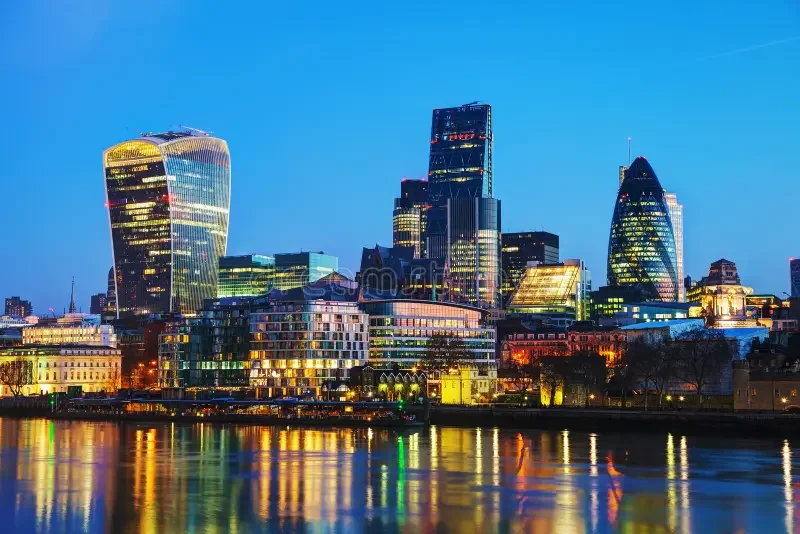
A sovereign digital twin for the City of London
The City of London is building a sovereign digital twin of the Square Mile - a square mile that generates £110bn of UK GDP a year, moves $4.7tn in daily foreign exchange, and contains 877 listed buildings, bridges, heritage sites and green spaces.
The problem
One organisation is responsible for every one of those assets. Until now, there has been no unified digital picture of any of them. The data exists - in asset registers, survey files, planning systems, sensor feeds and decades of accumulated records. The picture does not.
That is not a data problem. It is an architecture problem.
What I did
I set out the case for a twin that is an operational architecture rather than a visualisation: foundationally integrated, spatially aware, continuously live, and owned by the City itself rather than rented from a platform. Sovereignty is the point. A twin of critical national infrastructure that a vendor can switch off, price up, or read is not a twin worth building.
The work spans the architecture for spatial data, the integration model across existing systems, the governance framework for who may see and act on what, and the sequencing that lets each stage deliver value before the next begins.
What changed
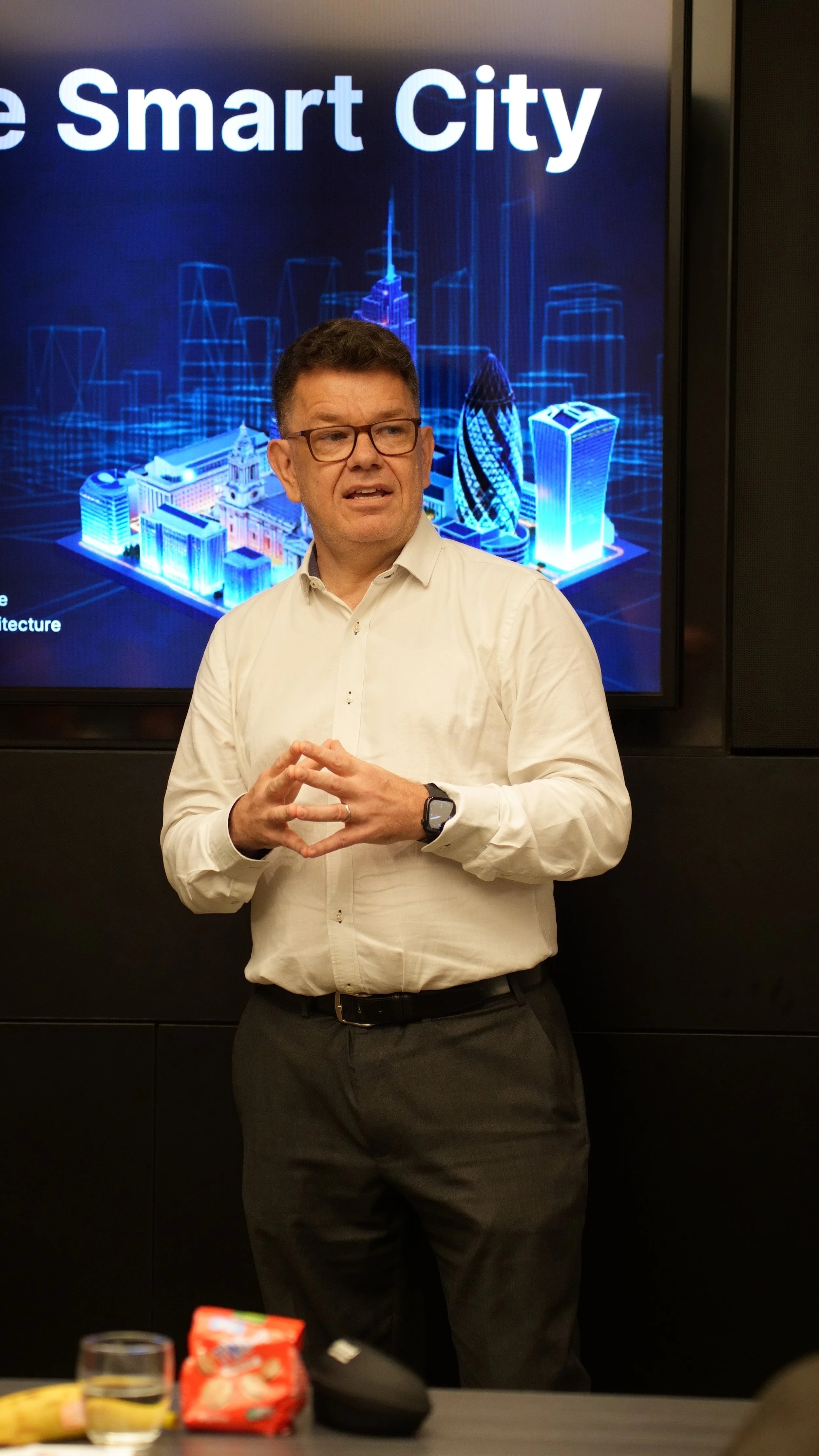
I presented the plan as a keynote at the Digital Twin Tech Summit in Amsterdam in June 2026.
The questions afterwards told me it lands well beyond cities. Almost everyone in that room was building a digital twin of some kind, and almost all of them had started from the same place: the data exists, the picture doesn't.
The smartest city is not the one with the most sensors. It is the one with the clearest picture.
Most digital twin programmes over-invest in capture and under-invest in the architecture that turns capture into a decision.
Sensors are cheap. Coherence is not.
The wider lesson
The smartest city is not the one with the most sensors.
It is the one with the clearest picture. Most digital twin programmes over-invest in capture and under-invest in the architecture that turns capture into a decision.
Sensors are cheap.
Coherence is not.